Let me start with something you won't read in any review — and it simplifies this whole decision.
The boxes say: 100 W versus 220 W. Sounds like a chasm — one light more than twice as powerful as the other. But light doesn't scale like the numbers on the carton. A camera measures light in stops, and doubling the power is exactly one stop. One click of the ISO dial. The whole menacing chasm between these lights fits into one thumb movement on your camera — a movement you won't see in the image on today's sensors.
So the question "will I have enough power" is the wrong question. The real one is: do you want to buy that one click with money, or with a camera setting?
And the answer is far from obvious — because what the bigger light's premium actually buys is something other than brightness. What exactly, I'll show you in one room, at two different hours.
This article contains affiliate links to the manufacturer's store. If you buy through one, I earn a commission — it costs you nothing extra, and you always see the current price, straight at the source.
The same room, 9 p.m.
Evening. Curtains drawn, a desk, a camera, you. The light stands a metre and a half from your face, a soft modifier on it. These are the conditions of the RC 100B — and here it lacks nothing.
The hundred is a palm-sized cube, 700 grams — less than a bottle of water. And softness clicks straight onto it: the dedicated RA-D30 softbox opens like an umbrella, weighs about as much as a cup of coffee and turns the spotlight into gentle window light. The duo — light plus softbox — weighs under a kilo together and, folded, disappears into the bag next to your camera.
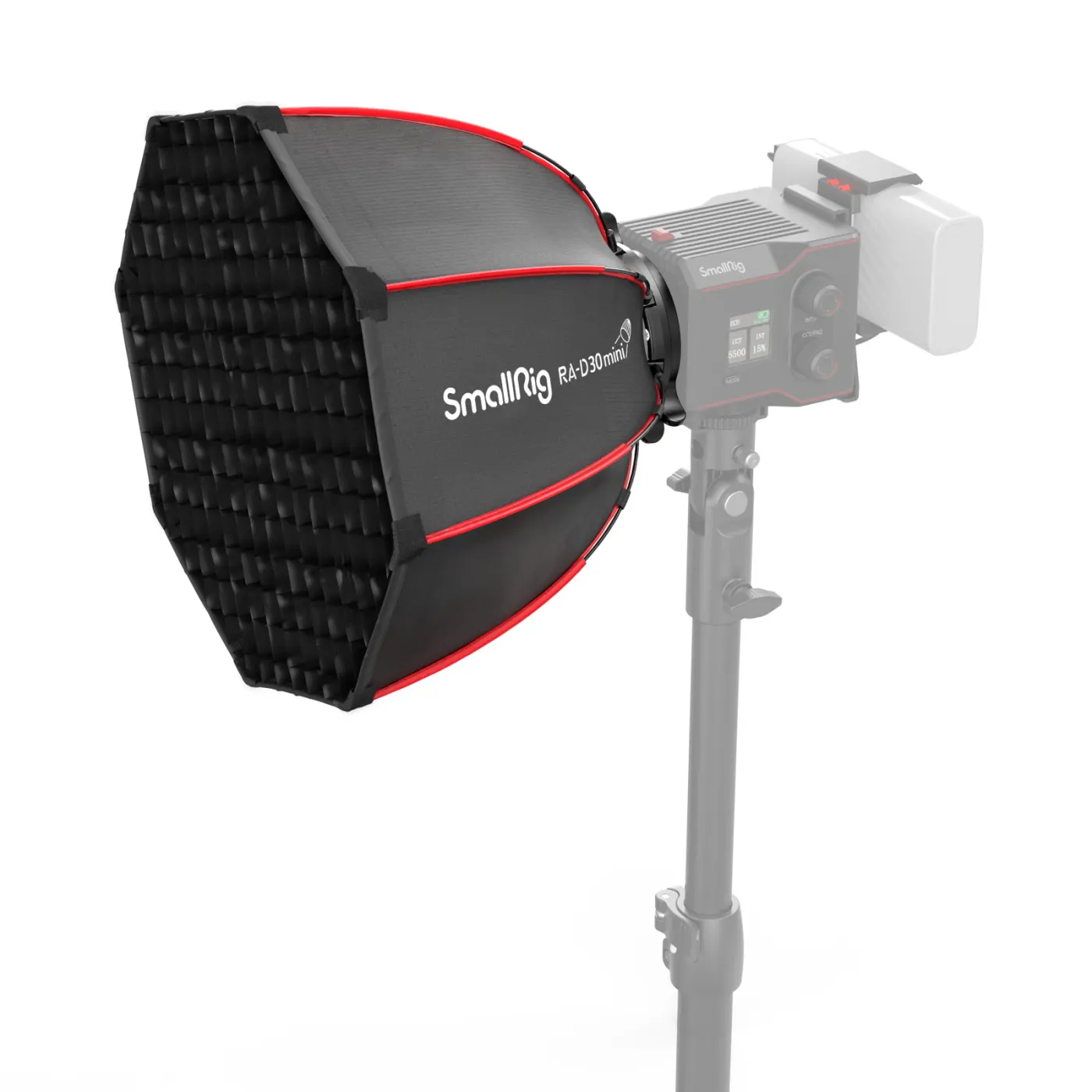
An evening talk to camera, an online course, objects on a table: the hundred does it with reserve, silently. Literally — its fan in eco mode whispers quieter than your breath. The microphone on your desk will never hear it.
The same room, 1 p.m.
Now the same place at midday. The sun slams into the window, half the face bright, half in shadow — and the camera shows it mercilessly. To even that fight, the light has to outshout the sun.
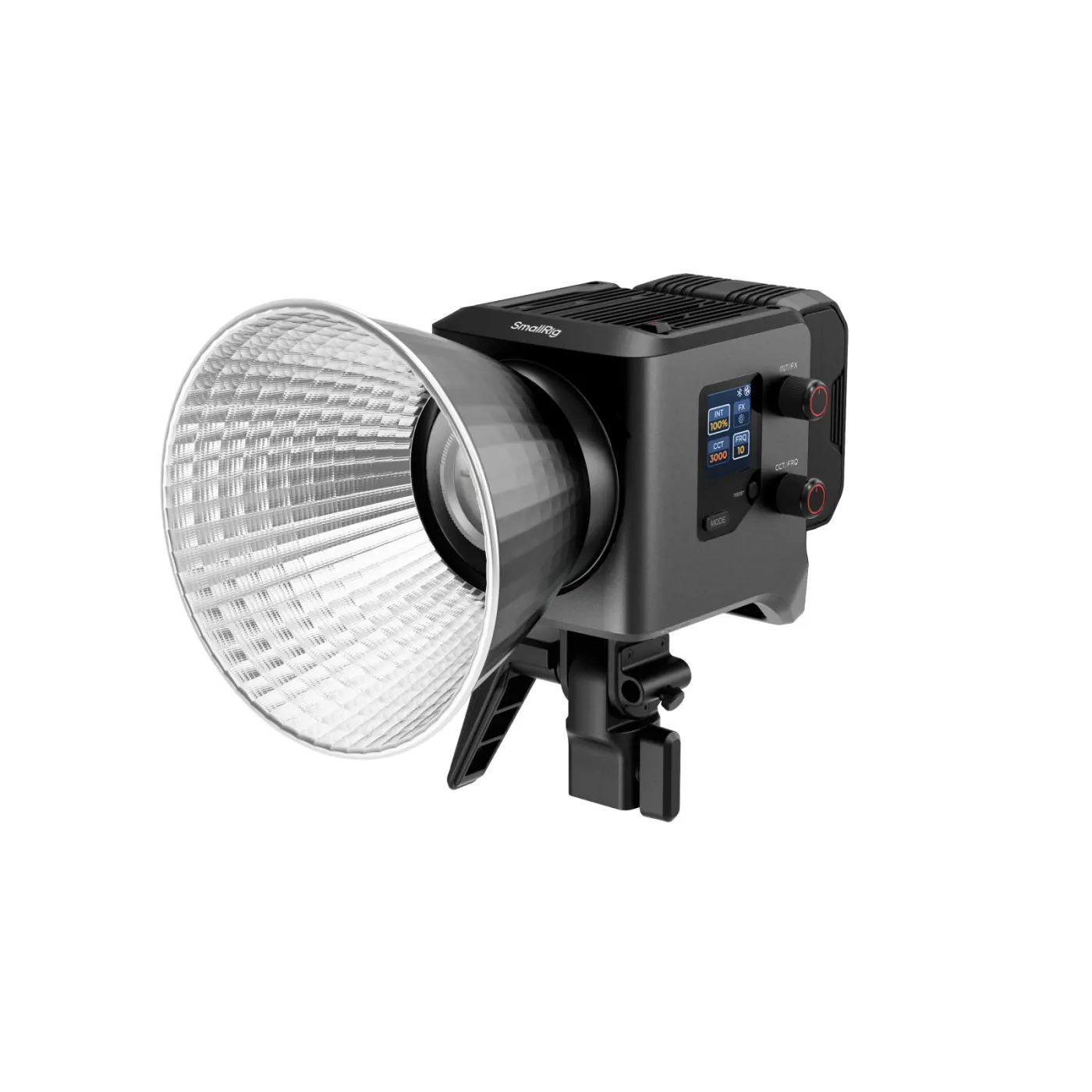
That's the scene of the RC 220B Pro. Through a large softbox, the two-twenty can build its own daylight in the room — even, soft, independent of whatever the sky is doing behind the glass. Its modifiers come from the world of full-size Bowens softboxes — like the RA-D55, a parabolic softbox with ribs made of storm-umbrella material, opened with one push — more light surface means softer shadows on the face and reserve for a second person in the frame.
If your recordings live in daytime — that's the difference you're paying for. Not "more", but independence from weather and hour.
The quiet of reserve — what a big light is really for
And now something people who work with light every day understand — and no product page mentions.
You don't buy a big light to run it at full power. You buy it so you never have to.
The two-twenty at half power gives roughly as much light as the hundred maxed out. But it works completely differently then: the diode barely warm, the fan brushing the air instead of blowing, the electronics working without strain. Half throttle: quieter, cooler, longer. Power reserve isn't a promise of "more light someday" — it's comfort and lifespan today, on every recording.
And the mirror image of that truth, which kills a myth: a big light is hungry. The battery that feeds the hundred for an hour at full power lasts the two-twenty less than half. "I'll take the bigger one, it'll do for the backpack too" — it won't. The big light stays home. The small one travels with you.
Power: what's in the box — and what isn't
This detail changes the maths more than it looks — and you can't see it in product photos.
The two-twenty Pro ships with a power supply in the box. Unpack, plug in, shoot. Complete from the first minute.
In the hundred's box you won't find a wall plug. The hundred drinks power like a phone: over USB-C from a strong charger or a power bank, or from a battery clipped to the light's back. That's not the manufacturer cutting corners — it's a statement: this light is built for life on the move, not for one corner. But I'll say it straight, because that's what you're here for: the price on the hundred's tag is not the price of a hundred that's ready for daily work — you add the power source yourself.
And here the compromise can turn into the smartest purchase of the whole kit. The VB99 SE battery — a flat block that fits in your hand — gives the hundred an hour of full power away from any socket. And it isn't single-purpose: the same block will charge your laptop fully and your phone several times on a trip. You buy a light's power supply — you get a power station for your bag.
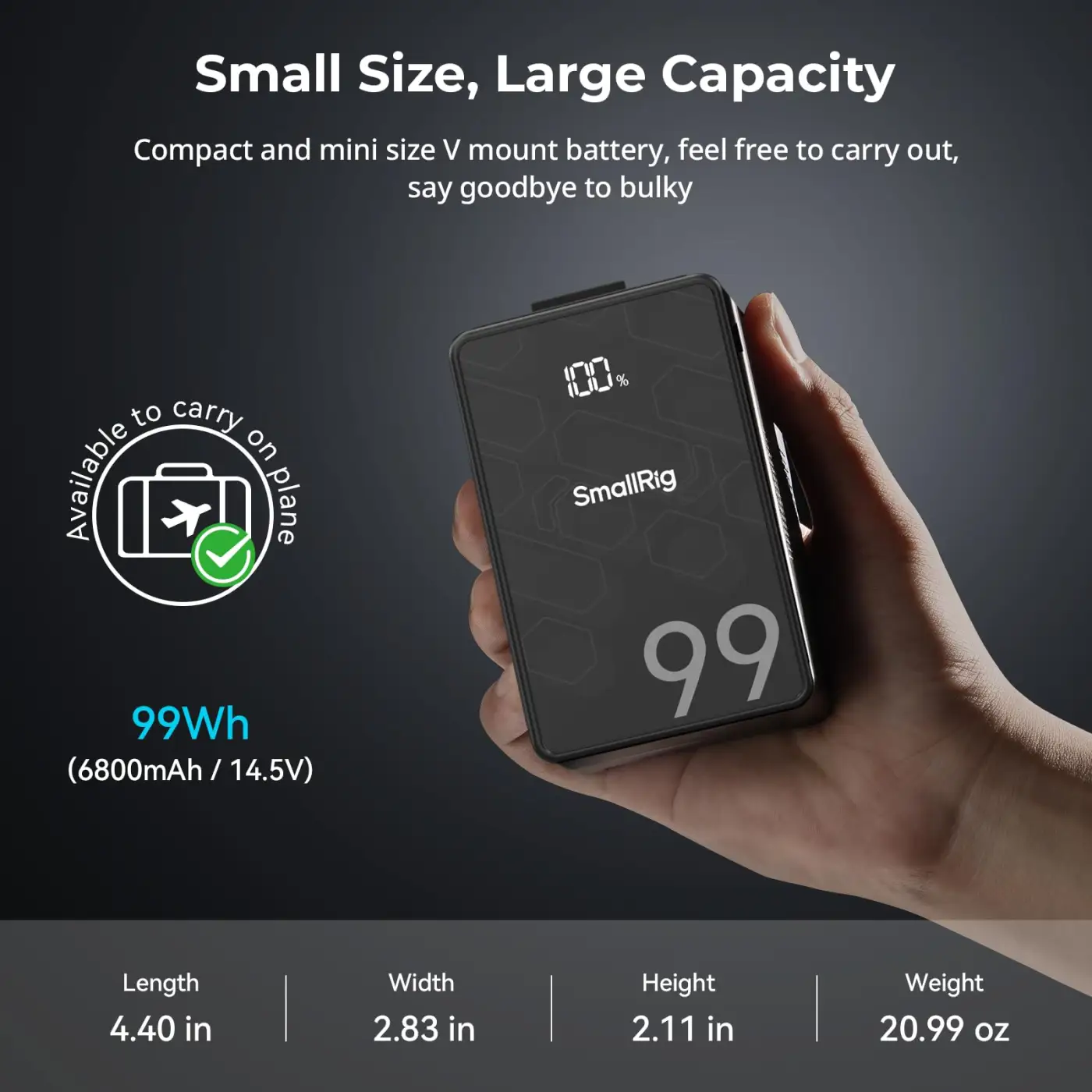
A side effect of this maths: the real price gap between the complete kits is smaller than the two price tags suggest. You can check the current amounts with one click at the manufacturer — they live, promotions happen, which is why I don't freeze them in the text.
The mount: what fits which
The lighting world has its universal standard for modifiers — Bowens. It works like a light-bulb thread: softboxes from hundreds of brands have fitted every light that carries it, for decades.
The two-twenty Pro has the full Bowens mount — every softbox on the market fits it: today's and the one you'll buy in three years.
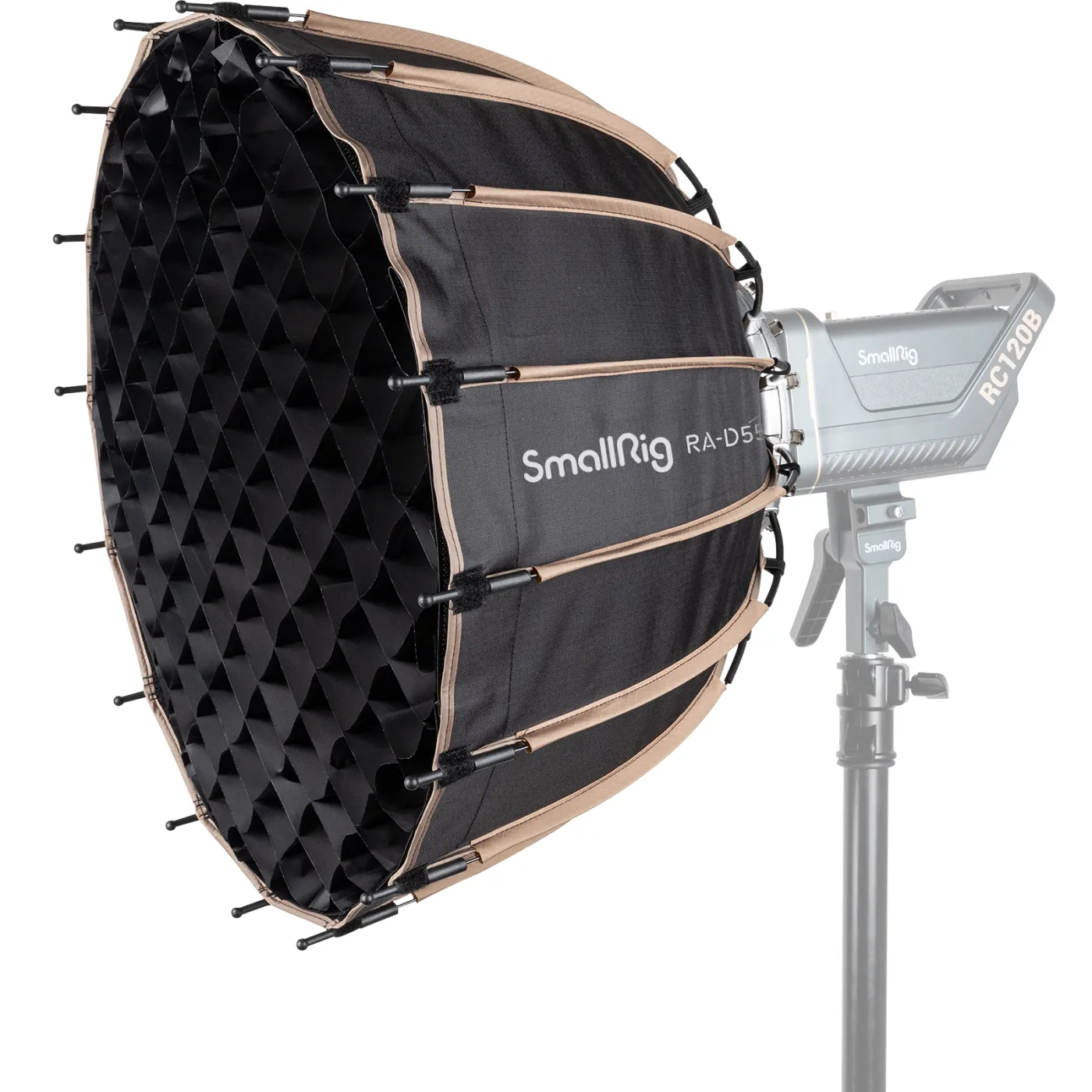
The hundred has its own, smaller mount: dedicated modifiers only, but they're tiny, open with one motion and weigh next to nothing. When you want more one day, there's the Bowens adapter — a ring that opens standard modifiers to the hundred. With one reservation the manufacturer prints small and I'll print large: the adapter carries about a kilo and a half. Compact softboxes — yes. Big studio modifiers — that's not this light anymore.
The foundation everyone stays silent about
There's one more cost of the big light you won't find in any comparison — because it doesn't live in the light, but under it.
The two-twenty with a full-size softbox is nearly three kilos high above the floor, with a surface that catches every draught like a sail. A light stand that calmly carries the hundred with a small softbox starts to wobble here — and three wobbling kilos above your camera is not a risk worth saving on. A solid RA-S200 light stand — metal legs, payload up to four kilos, widening leg spread for stability — is the quiet, mandatory line in a big light's budget. And I'll say it straight: it carries the two-twenty-plus-softbox kit with reserve, but at full height spread the legs wide — reserve isn't luxury, it's hygiene. I write about it because everyone else stays silent.
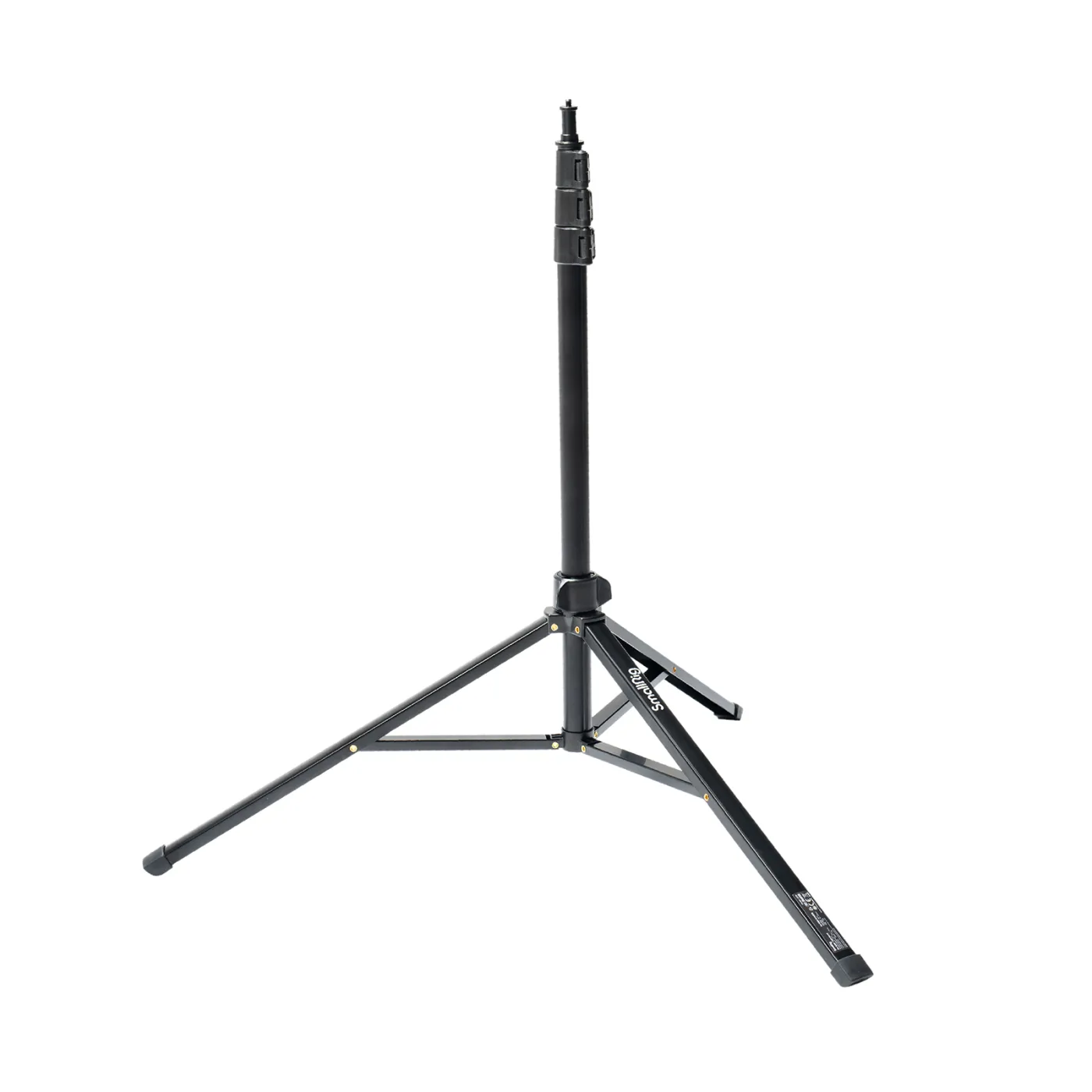
The hundred doesn't know this problem: a kilo with a softbox stands on almost anything.
Which one for whom — no ranking, because a ranking lies here
There is no better and worse. There's the same room at two hours — and the question of which hour your recordings live at.
Take the RC 100B if: your light works in the evening or with curtains drawn; you record alone, with the light close; your gear travels; silence is a condition, not a wish. Complete it consciously from day one: the RA-D30 softbox gives it softness, the VB99 SE battery — freedom from the socket, and keep the Bowens adapter in mind for the day you want more.
Take the RC 220B Pro if: you record in daytime and you're done losing to the window; the light gets a permanent spot at home; you plan to grow — bigger softboxes, bounced light, a second person in the frame; and you want the complete package out of the box, power supply included. Add a solid stand in your head — it's part of this decision, not an accessory.
I'll say it straight, because that's what you're here for: half the readers of this text should take the cheaper one. That's the half that records alone, in the evening, at a desk — for whom one ISO click on the camera does everything the two-twenty would do with money. The other half — the one fighting the daytime window, with plans to grow — will pay the difference and not regret it once, because their reserve will work at half throttle on every recording: quieter, cooler, longer.
Check which side of the room you're on. The current prices — always fresh, promotions included — are waiting at the manufacturer: RC 100B · RC 220B Pro.
I test. I compare. I tell it straight.