Disclosure: product links are affiliate links — if you buy through them, I earn a commission. It doesn't affect what I write.
What this is about
One grip instead of three locks
A regular tripod sets up like this: unlock a leg, extend, lock — three times, plus levelling. SmallRig replaced that with one hydraulic mechanism — X-Clutch: you squeeze the clutch, all legs drop to the ground, set their angle and lock themselves. You let go — the tripod stands at the right height. Works one-handed, on stairs and uneven ground too. In documentary work, where the scene doesn't wait for the gear, those seconds decide whether the shot happens at all.
Two to choose from
The same mechanism, two classes
SmallRig offers X-Clutch in two models. Contrary to what you'd expect, it's not about weight — both weigh almost the same (3.7 and 3.8 kg). What separates them is the head, the payload and the leg material. That's the whole distinction.
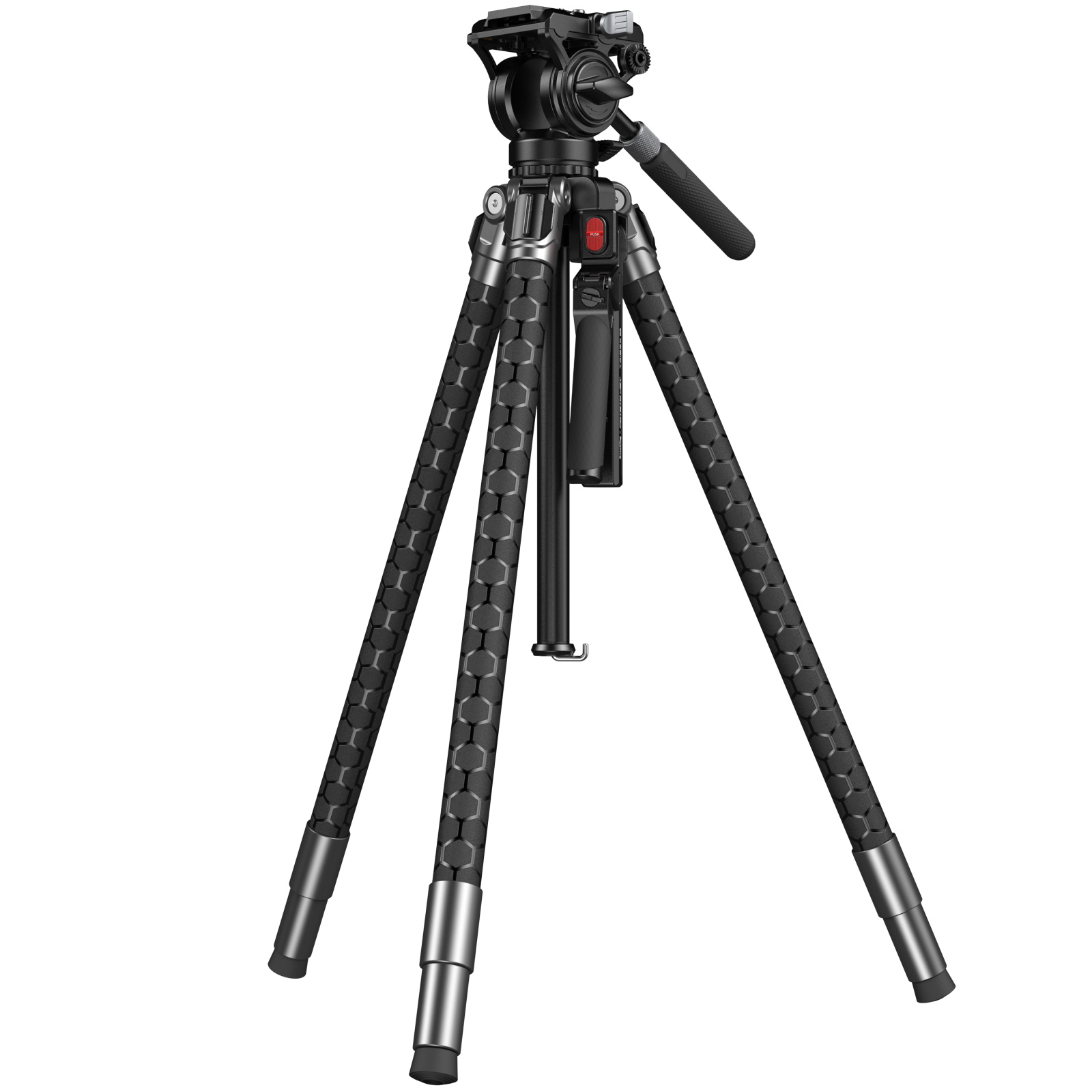
TRIBEX SE
X-Clutch, a fluid head with 6 kg payload and fixed counterbalance, legs up to 15 kg. For light and medium setups that don't change from day to day.
TRIBEX SE at the manufacturer →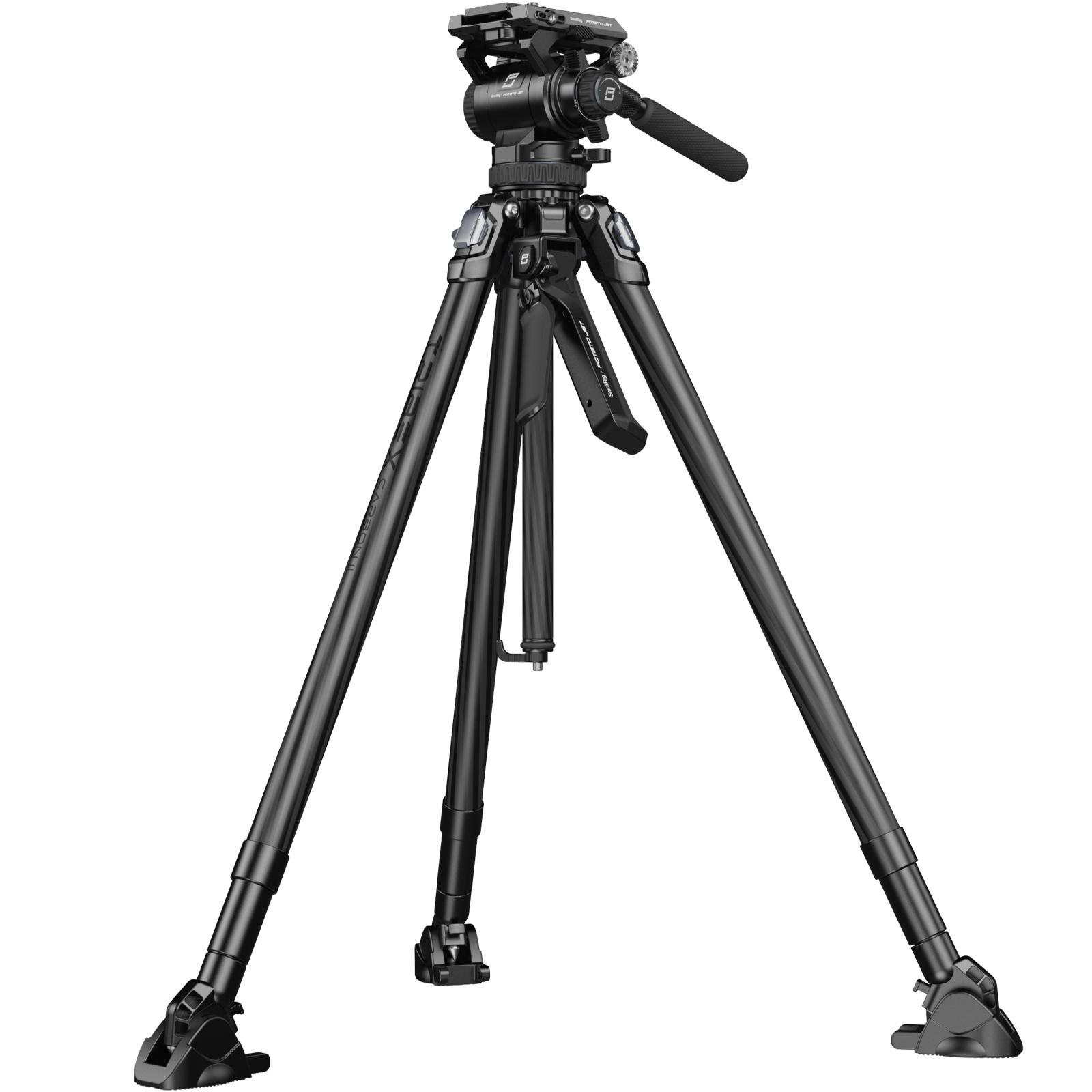
TRIBEX CARBON II
Legs up to 25 kg, a Dynamic Balance head with adjustable counterbalance and stepless damping. Awarded Red Dot, IDEA and Golden Pin.
CARBON II at the manufacturer →In black and white
TRIBEX SE and CARBON II side by side
Three highlighted rows — head, payload and material — are the whole distinction. The rest is nearly identical.
| Feature | TRIBEX SE | TRIBEX CARBON II |
|---|---|---|
| Material | aluminium | carbon fibre |
| Head | fixed counterbalance, simple damping | adjustable counterbalance, stepless damping |
| Leg payload | 15 kg | 25 kg |
| Head payload | 6 kg | 8 kg (adjustable counterbalance up to 6 kg) |
| Weight (kit) | 3.7 kg | 3.8 kg |
| Height | 23–166 cm | 27–168 cm |
| Folded | 72 cm | 79 cm |
| QR plate | Manfrotto 501 + DJI RS | Manfrotto 501 + DJI RS |
| Awards | — | Red Dot · IDEA · Golden Pin |
| Price | current in store | current in store |
Technical data verified directly on SmallRig's product pages (models 5305 and 5755), as of June 2026. Prices and availability can change — check the current ones in the store.
What to look at
Where the differences matter
The SE has a fixed counterbalance — matched to a light, unchanging setup. Add a monitor, a microphone or a heavier lens, and the tilt starts to "drift" and you have to watch the balance. The CARBON II has an adjustable counterbalance and stepless damping — it holds a heavier, changing setup, and moves run smoother.
Aluminium and carbon weigh nearly the same here, so weight doesn't settle it. Carbon differs in stiffness: fewer vibrations at long focal lengths and in wind, handles frost and heat better. The SE's aluminium is cheaper and just as stable with lighter setups.
Add up your setup's weight (body + lens + microphone) and add a reserve. For a light or medium camera the SE keeps a solid margin. For a heavier rig or a full day in the field — CARBON II.
Which one for which work
The choice — and what they can't do
— Light or medium setup, the tripod mostly stands and rides in the car, you're not adding weight? The TRIBEX SE gives you the full X-Clutch mechanism and solid aluminium at the lower price.
— You're building out your rig (matte box, monitor, heavier lens), carrying the tripod all day and buying once for years? The CARBON II is the better head, higher payload and stiffer material.
— Where they fail: the SE's head is simple — at focal lengths above ~300 mm or with an unbalanced setup it starts to fall short; then you need the CARBON II's head. And one thing concerns both — the mechanism is hydraulic, so it doesn't like sand and dust; after rain, dry the tripod before folding it.
Setup speed is identical on both. The choice comes down solely to the head, the payload and the material.
Common questions
Questions that keep coming back
What actually separates the SE from the CARBON II?
The X-Clutch mechanism is the same. They differ in the head (SE — fixed counterbalance; CARBON II — adjustable, stepless damping), leg payload (15 vs 25 kg) and material (aluminium vs carbon fibre). The weight is nearly identical: 3.7 and 3.8 kg.
Is the SE enough for a mirrorless camera or a DJI Osmo?
Yes. For a light or medium camera with a lens up to about 300 mm the SE holds firmly. The head carries 6 kg, the legs 15 kg — the reserve is large.
What is X-Clutch?
A hydraulic mechanism: you squeeze one clutch, all three legs drop, set their angle and lock themselves. You set the tripod up one-handed, in a second — on stairs and uneven ground too.
Aluminium or carbon — which is better?
There's no "better" in a vacuum. Carbon is stiffer (fewer vibrations, handles temperatures better) and comes with the better head in the CARBON II. The SE's aluminium is cheaper and just as stable for lighter setups. The weight of both is nearly the same.
Can the head be swapped?
Yes, the head is removable. Both take Manfrotto 501 and DJI RS plates, so you'll move the camera between tripod and gimbal without workarounds.
The decision in short
Light or medium setup, one safe choice → TRIBEX SE. Building out your rig, buying for years → CARBON II.
Product links in this text are affiliate links — if you buy through them, I earn a commission. It doesn't affect what I write. Prices and availability can change — check the current ones in the store.
How this piece was made: I gathered the technical data from the maker's own pages and checked it at the source, compared it against independent tests, and wrote the conclusions and the drawbacks myself. I haven't had the gear in my hands — if I do, I'll say so plainly.
Questions about gear? bartoszwydawnictwo@gmail.com · Privacy policy · Impressum